“Rumors of my demise have been greatly exaggerated” – Rise Against, misquoting Mark Twain
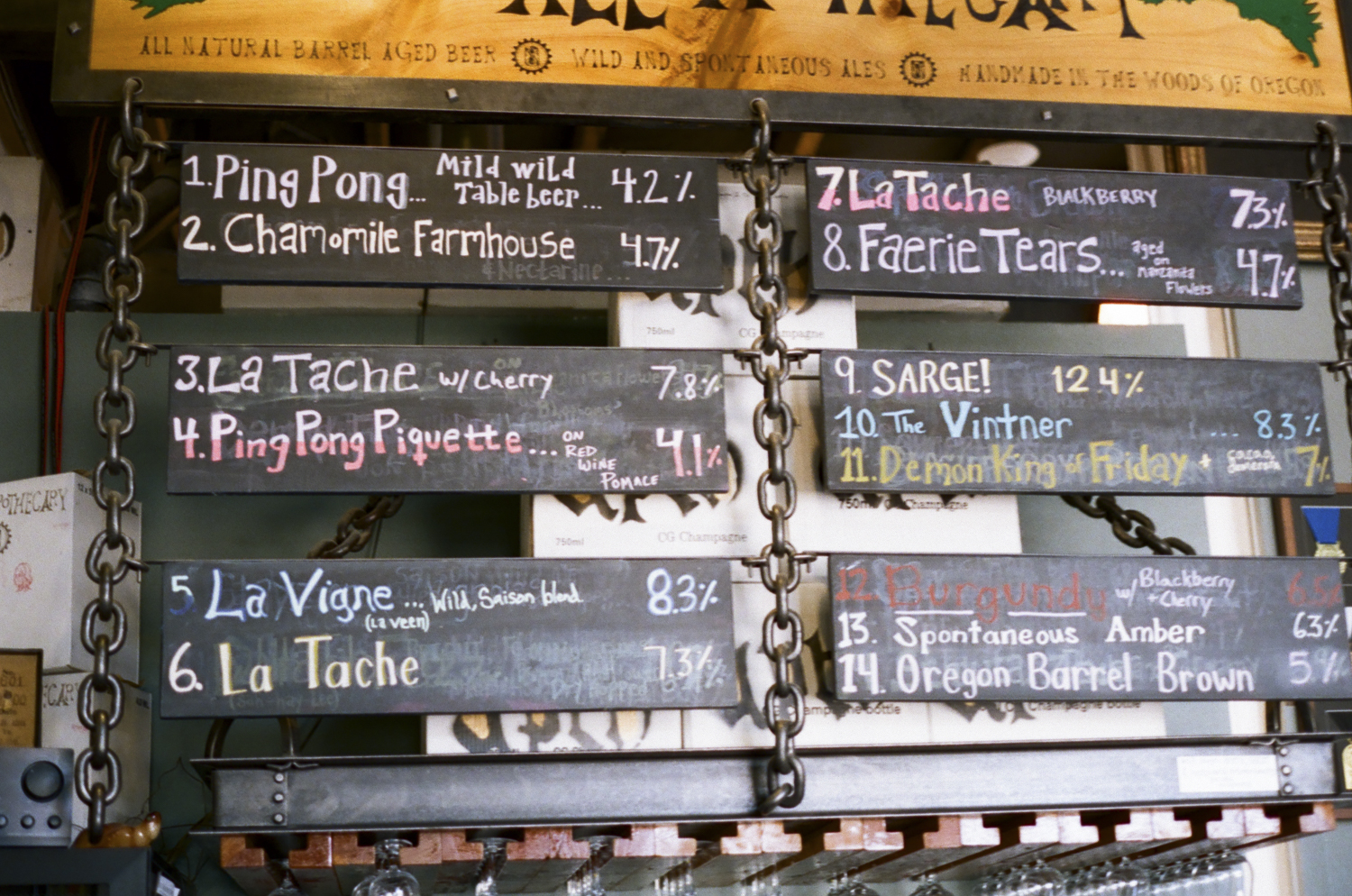
You may have heard that The Ale Apothecary is closing. As it turns out, this isn’t exactly the case.
On April 17 and 18 2026, talk amongst the crowd in their west side taproom in Bend, Oregon was mostly along those lines; “I’ll be sorry to see this space close…” and so on. That weekend, The Ale Apothecary hosted their farewell event in the taproom, with 10 local bands starting at 5 p.m. on Friday, and at 3 p.m. on Saturday. Amidst the sound checks and warm ups on Saturday afternoon, we caught up with Connor Currie, co-owner and brewmaster.
“So, you’re moving to Redmond?”
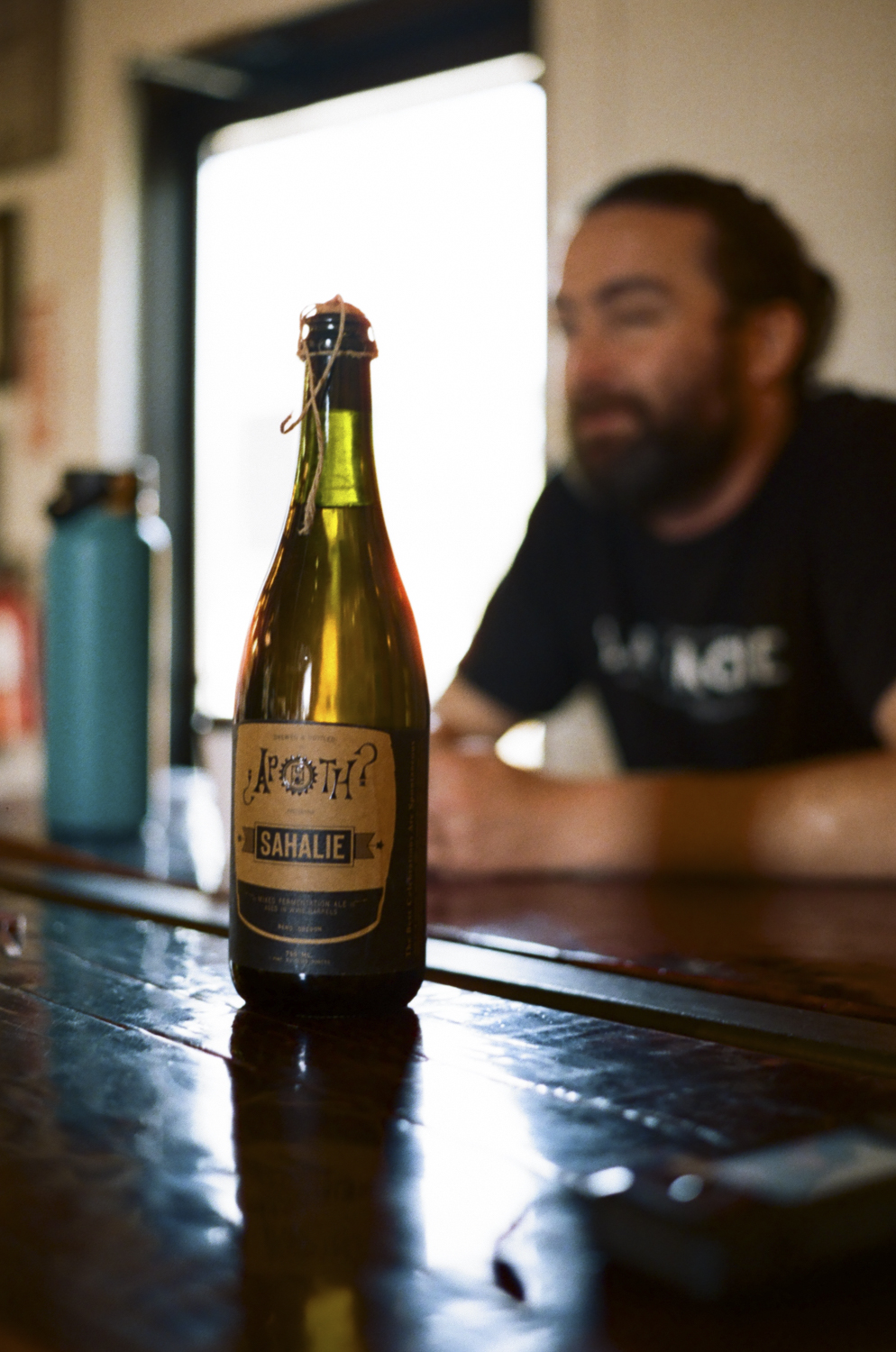
“The brewing is, yeah…So our lease is up and the rent was gonna go up enough where it was not gonna make sense, especially because, you know, most of our beer sits around in barrels for a year, so it doesn’t make sense to pay high,” Connor explained.
“Very long business model,” I observed.
“Yeah, it’s crazy.”
Wild, mixed-culture, sour, and barrel-aged beers can be a tough investment from a business perspective. They generally take a long time to become drinkable. Where an IPA or stout can be ready to sell in a few weeks, the stuff Connor makes takes years to mature (for a detailed look at one long-aged style, lambic, see How long would you wait for a pint?).
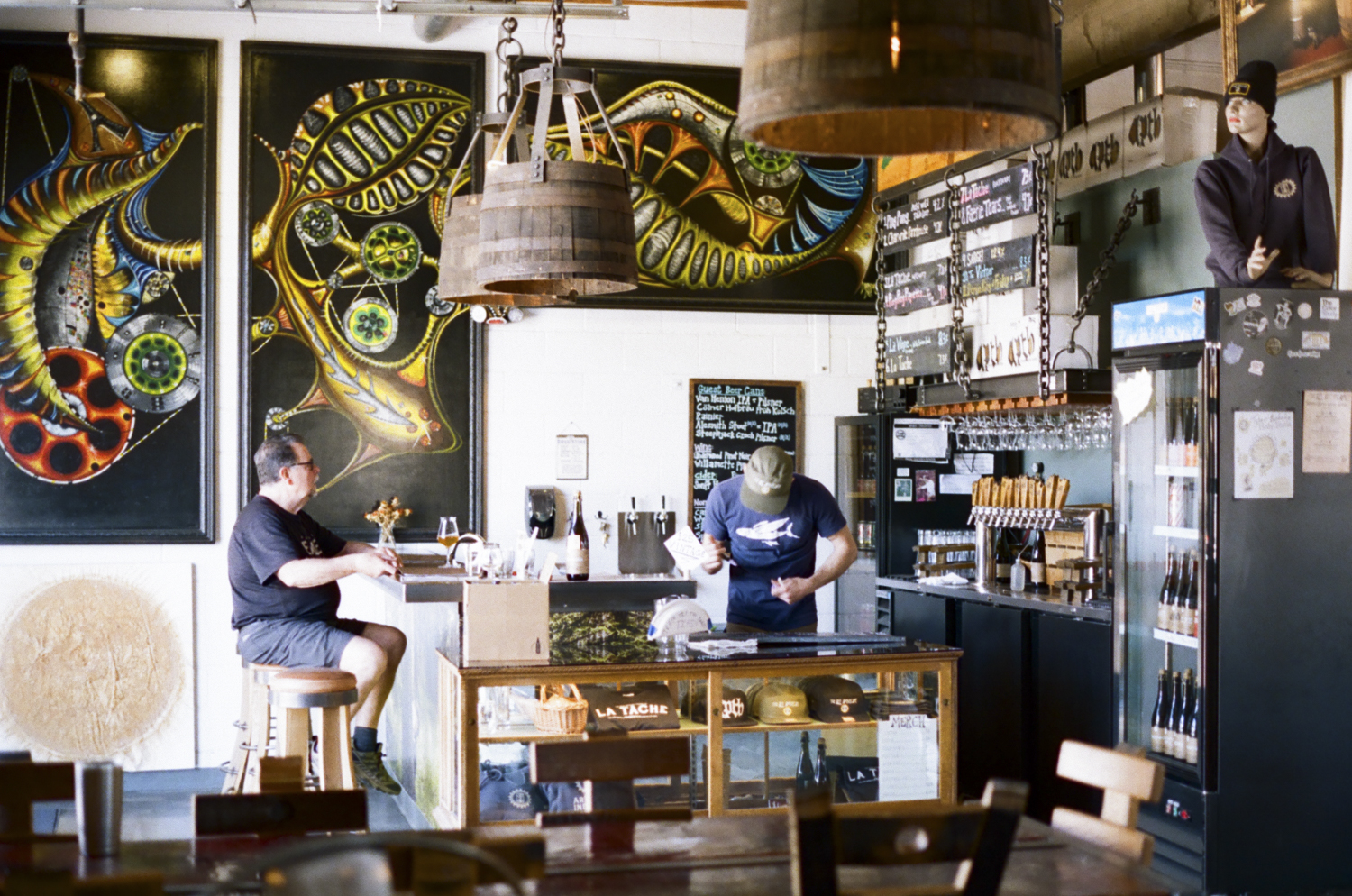
The Bend space that The Ale Apothecary occupied is large enough for a tasting room with a seating area, a small stage area, plus storage and beer production. They created the stage area to make a space for local musicians to come and play, “…to try to support the local community and have it be that thing.” And as he’s been moving stuff out, Connor has enlarged the seating area.
As cool as the tasting room is, with its funky artwork and barrel-stave furniture, that business model isn’t proving sustainable for The Ale Apothecary post-pandemic. Connor related that “… around COVID times, things drastically dropped off for us and we’ve never gotten back to that production amount.”
This seems like a good spot to ask about what changes Connor might be seeing in the market.
“We have a new generation of drinkers (or non-drinkers), as the case may be…I’m curious, what are you seeing?”
“I mean…there was a while where there was the big hype in beer traders and sellers and that’s kind of died off, which is fine. It didn’t seem like a sustainable thing anyways,” and while mixed-culture, long-aged beers, often with rare and/or foraged ingredients are expensive to make, it can be difficult to explain why to someone who is used to kettle sours, which can be produced more quickly, or other styles of beer that don’t cost quite as much to produce.
Bottle sales are down, and during the pandemic, it was harder for people to enjoy 750ml bottles, which are sized to share with a small group, not so much an individual serving.
The Ale Apothecary “…started brewing our table beer and some more approachable beers, which are still farmhouse-y…I know quite a few people that don’t drink very often and they’re like, this is some of the only beer they drink.”
With the move to Redmond, Oregon (they’re supposed to be out of the current space by the end of April), the business model will be changing. At least to begin with, the new space will be production-focused, and The Ale Apothecary won’t have their own taproom right away. Connor is planning to continue Ale Club, which, in years past, has provided “Twelve 750ml bottles of our favorite beers selected specifically for Ale Club members” according to The Ale Apothecary website.
There may also be an opportunity to schedule brewery tours after The Ale Apothecary really gets going in the new space. And they may look at opening a new tasting room at some point.
Connor also related that they’ll probably open to the public on a quarterly basis for bottle sales, and since they would schedule pickup for online sales during the pandemic, he might go back to that model, after the move.
Connor also expects to be doing more special events, such as beer pairing dinners. “…all of our beers have a story,” and he feels that “…more focused events…will allow us to…tell the story better.”
Speaking of stories, Ben’s first pint for this session was the epically-named Demon King of Friday, which began with Minotaur, a “…big stout…started in Pinot Noir barrels, then bourbon barrels, and finished on blackberries.”
Minotaur was strong, with high acidity, but it didn’t carbonate in the bottle. So they brewed a young, malty beer, and aged that together with Minotaur (which they removed from the bottles) in a barrel for nine months. The resulting “long-aged beer” was bottle-conditioned.
The second iteration of Demon King of Friday began as a big stout aged in Laphroaig barrels. Connor and Paul Arney (founder of The Ale Apothecary) didn’t like it very much, and it mostly languished in bottles for several years.
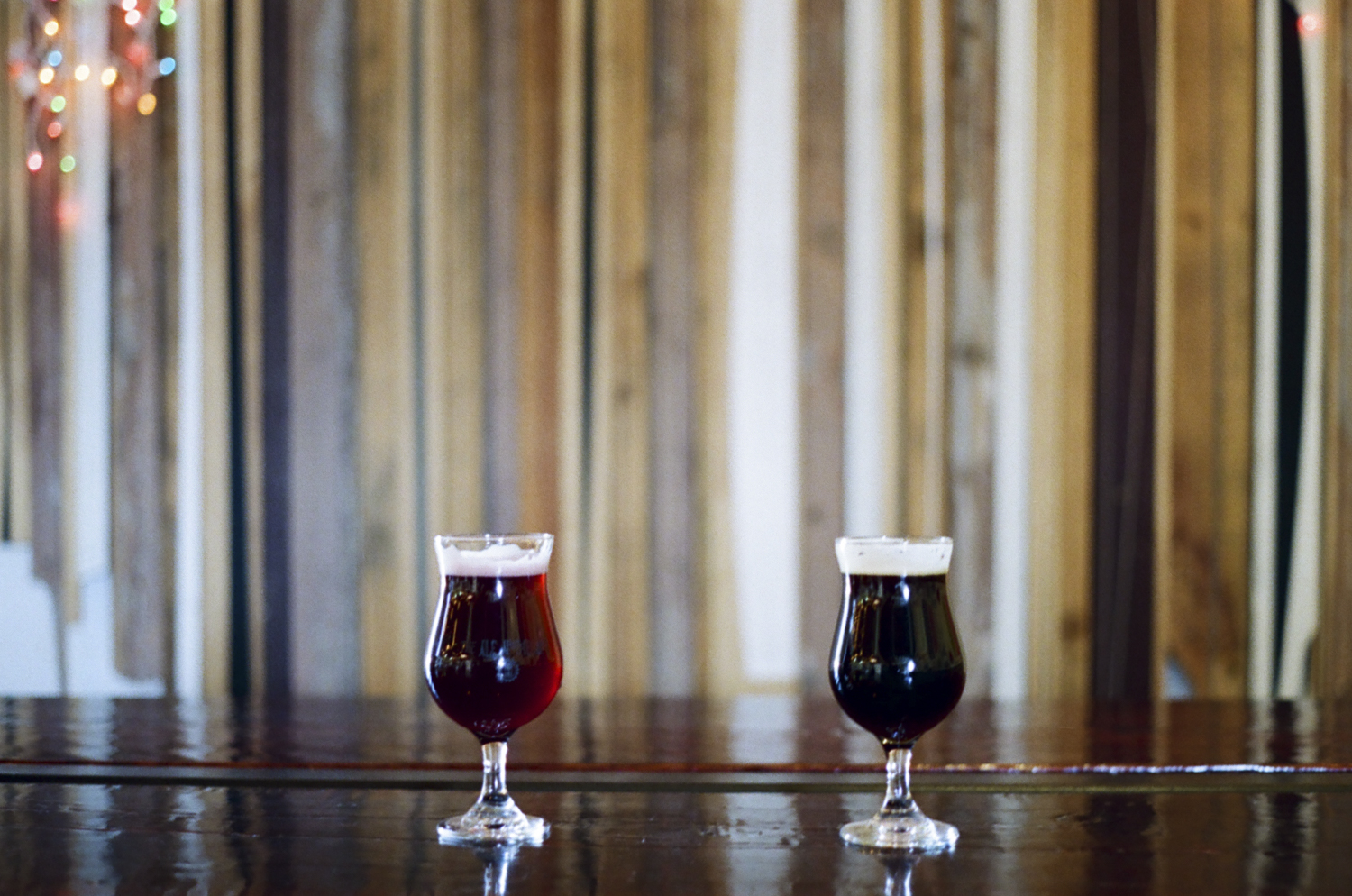
At some point, they decided to blend that stout with a young beer, and they made two versions of that one; a version finished on cacao, from Seahorse Chocolate, and carbonated with demerara sugar (they usually use wildflower honey), which is the version we tasted. The other version was finished on cascara (dried coffee cherry husks).
Demon King of Friday is somewhat large (somewhere in the neighborhood of 8% ABV), and it’s amazing. I didn’t take tasting notes, but I can tell you that it’s an excellent long-aged, sour and funky beer.
Unsurprisingly, Connor started out by homebrewing. His brother (co-founder of Swift Cider in Portland, Oregon) gifted him a homebrew kit, which he apparently made great use of. Connor also spent some time as chef at Platypus, a homebrew shop with a downstairs pub. Platypus closed in 2020, much to the chagrin of the local beer-loving community.
Connor met Paul Arney there, and he started hanging out and helping to package the beers. At the time, rather than the metal cages to surround the corks, they were hand-tying twine “cages” around the corks. Connor hung around long enough to actually get a job working with Paul (in 2014). Production was in Paul’s garage, but not the kind of garage brewery you might be thinking of. From the photo hung in the tasting room (and displayed on their website), Paul’s brewing setup included a great deal of oak, and a “…direct-fired copper kettle that was made by a metal worker up in Olympia, Washington…” and not much stainless steel.
The Ale Apothecary name is apparently an homage to Paul Arney’s family history of running pharmacies. In 2024, The Ale Apothecary made local beer headlines because, as Connor explained, Paul “…was looking to get out…” which caused some alarm (and there are some publications that love drama). Connor wasn’t in a position to just take over the business by himself, “…so a couple, Joe and Taryn, bought it… they used to run Wolf Tree Brewing, which was out on the coast and they did some spontaneous farmhouse beers. And they’d moved to Sisters and were looking to maybe open their brand here, when Paul was looking to sell. So they bought it and they own it now…but they…moved to Hawaii a little while ago…so they have ownership, but they’re not very hands-on.”
Currently, Connor handles all the brewing, though he might be getting some help soon. The Ale Apothecary isn’t a large production; Connor uses the same direct-fired three-barrel kettle that was previously in Paul’s garage.
Naturally, a brewery that specializes in oak barrel-aged, wild and mixed-culture beers, is likely to have some interest in historical styles, and if they’re also the types to forage local ingredients, “tree beer” is a likely occurrence. According to Connor, “…Sahati was the first tree beer we did,” and he points to a hollowed out half-log standing in the tasting room, “…this was the lauter tun, the kuurna….so, you know…we do a mash and then scoop all the grains in there with spruce boughs on the bottom…inspired by Finnish sahti.” And then, a couple of years later, they branched out (lo, a pun!) to “…a White Fir beer because both the trees are on the property.” At some point, Lars Garshol, who literally wrote the book on Historical Brewing Techniques, did a brew with Connor and Paul. “He brought over some dried kveik…and we brewed…a raw beer, so no boil. And with White Fir, it was inspired by sahti brewing.”
Connor has also tried brewing with the Western Juniper, which grows all over in central and southern Oregon. But it’s kind of catty, as Ben described, and “…kind of medicinal and astringent” as Connor put it. “And then years later… found out that they have the same variety in Finland that grows in the mountains around here. So we…have a batch that’s a pretty traditional sahti recipe, but fermented with our house culture…And it’s a really cool herbal, little bit of citrus character.”

Most of The Ale Apothecary beers use their house culture, which has developed over quite a few years. “…the house culture has definitely changed over time…we had a while where our acidity climbed way up, because…the bacteria was becoming more and more hop tolerant…so we were essentially breeding a hop tolerant bacteria.”
They increased their hopping rates to balance the acidity, and they also use aged hops, “not [to] get too much bitterness, but [to] get the right balance in acidity that we wanted.”
How much hops are we talking about? “…maybe around like a pound per barrel.”
While any rumors that The Ale Apothecary is closing are exaggerated, their business model is changing, with a greater focus on distribution, and perhaps online and some on-premise sales, and special events, at least for a while. But Connor is working on expanding distribution, and they do also see overseas sales, particularly in China. So keep an eye on taprooms near you.


Latest posts by Meagan Wilson (see all)
- Rum is an agricultural product - September 23, 2026
- Tumalo Cider Co. – the best semi-dry ciders in the US - July 19, 2026
- The Ale Apothecary – moving, but not gone - April 26, 2026



Wow, “tree beer” sounds like such a labor of love and lovely nod to their family roots.